Lead in your Home
We’ve known the health effects of lead poisoning for a long time and now know that there is NO safe threshold for lead exposure. Because of political pressure, many countries, cities and states have allowed and sometimes mandated that lead pipes be utilized for water distribution, that lead be added into gasoline, and have allowed lead based paints into homes. These products/installations are now illegal. HOWEVER, these lead pipes, lead solder connecting copper pipes, and lead based paints are STILL in our homes, potentially poisoning ourselves, our children and grandchildren. The information on lead poisoning is so vast that I am presenting only statements and quotations in a timeline fashion with references for your research.
Lead poisoning (also known as plumbism, colica pictorum, saturnism or painter’s colic) first written about by the Egyptians is said to have contributed to the fall of the Roman Empire. *6
1850 Scientists began fingering water pipes as the source of a growing number of lead poisoning cases. *9
1866 New York Herald published the article “The Dangers of Lead Pipes” #9
1900-1920 Homes built in this period usually have lead based pipes *1
1910-20 When municipalities began banning the use of lead pipes in the 1910s and 1920s, other sources of lead poisoning – paint, for example – also came under scrutiny. In response, the lead industry fought back. The National Lead Company ran ads proclaiming that ‘lead helps to guard your health’ *9
1920 Environmental pollution by lead caused by the introduction of tetraethyl lead in gasoline became an alarming public health problem. The use became restricted in the 1980’s: its effects on blood lead levels are now evident. *6
1921 the International Labour Conference organized a meeting in Geneva to adopt the White Lead Convention. The convention led to the prohibition of the use of white lead in indoor painting in the several countries…Sweden and Czechoslovakia…Austria, Poland and Spain…Finland and Norway. In the United States, the Lead Industries Association succeeded in blocking the signing of the ILO convention. *6
1921 Surgeon General convened a meeting when 8 workers died in straitjackets from dramatic central nervous system involvement from tetraethyl lead poisoning. *6
1928 To maintain sales of lead pipe, the LIA (Lead Industry Association) lobbied the government at all levels and targeted the people who both designed and installed water distribution systems with outreach and educational material and other resources. The association carried on its promotional campaign into the 1970’s *10
1928 LIA’s Plumbing Promotion Program succeeded in Massachusetts where bans on certain kinds of lead pipe were lifted, in Pennsylvania lead pipe was formally required by the plumbing code to the exclusion of alternatives. The LIA even managed to have lead pipes inserted into regulations governing federal construction projects, as well as building codes and building specifications. *9
1950 Federal guidelines and specifications sanctioned lead pipes into the 1950s
1920-1965 Homes built in 1920-1965 generally have galvanized plumbing *1
1960 when artificial softening of drinking water began, lead began to dissolve from the pipes.*6
1965-1980 These homes are considered risky if they were built between 1965 and 1980 when copper pipes and lead-based solder were common place in plumbing *1
1970 LIA (Lead Industry Association) lobbied the government at all levels into the 1970s. *10
1970 Only four US states and 10 municipalities had laws or ordinances prohibiting indoor use of lead paint. In 1970 it was estimated that the annual incidence of symptomatic and asymptomatic lead poisoning in the U.S was as high as 240,000 cases.*6
1970-1980 National model plumbing codes APPROVED LEAD into the 1970s and 1980s and most water systems based their regulations on those codes. During this time period there were more than 22 million new homes built in the United States *1 The primary source for lead in most drinking water sources is the piping used within a distribution system or the household plumbing…YOUR household plumbing may be the cause for lead in your drinking water.*4
1978 World Health Organization convened an expert meeting to scrutinize the present knowledge on lead, mercury and cadmium, creating a booklet called “Recommended Health-Based Limits in Occupational Exposure to Heavy Metals.” The WHO officers who were involved in editing the document have privately stated that industry representatives lobbied heavily, both in the WHO and in the then CEC Health Protectorate, to prevent the publication. These activities delayed the publication of the report and degraded it to a “technical report.” *6
1978 Federal government banned the use of lead based paint.
1980 Seattle banned lead-based plumbing materials *1
1980 Nearly all homes built prior to the 1980s still have lead solder connecting copper pipes. *8
1984 EPA conducted a survey of 153 public water systems finding that 73% had installed lead service lines (a service line is the pipe from the street to your house) *10
1985 King County banned lead-based plumbing materials *1
1986 passage of Safe Drinking Water Act prohibited installation of lead water pipes.
1987 Washington State banned lead-based plumbing materials*1
1990 In the US practically no leaded gasoline was sold after 1990. *6
1990 Testing of children with lead poisoning showed a decrease in IQ of 6 points leading some scientists to suggest that slipping school performance in the US to a large extent can be attributed to past subclinical childhood lead poisoning. *6
1997 Seattle Public Utilities random sampling found 90% of houses came back with lead levels at nearly 20ppb
1997 CDC estimates that as many as 5% of all American children suffer from subclinical lead poisoning. *7
2001 Seattle began adding soda ash meant to reduce most of the lead leaching from problem pipes. *1
2003 20% of all lead exposure in young children comes from drinking water *7
2004 Seattle Public Schools find high levels of lead in the drinking fountains *1
2004 Plumbing in many city homes poses lead risk. *1
2004 EPA’s standard for lead contamination of drinking water is ZERO.*1 There is NO safe level for lead exposure *4 Standard for immediate action is 15 ppb. *1
2010 EPA RRP (Renovation Repair & Painting) ruling came into effect penalizing residential contractors up to $35,000 per incident if work done on homes older than 1978 is not within the RRP guidelines. This ruling is to attempt to protect residents, owners, and workers from lead poisoning from lead based paint. A minute amount of lead dust can cause lead poisoning. EG, Nailing a picture hanger into the wall could cause lead poisoning.
2014 PRIOR to 2014 the legal definition for “lead free” was plumbing fixtures with a lead content of less than 8%. In 2014, the term was redefined to include only fixtures with a lead content of .25% and newly installed fixtures must use the “lead free” materials, but this did not apply to fixtures currently in use. *4
2016 EPA considering a more ‘proactive approach’ to replacing lead pipes. *2
2016 Some major US cities still have 100 percent lead piping bringing water from the utilities to homes and businesses. *8
2016 Hundreds of tons of the lead in paint that covered the walls of houses, apartment buildings and workplaces across the United States remains in place almost four decades later…*2
2016 EPA officials addressing Plumbing Manufacturers International said that the EPA has reason to believe that faucets are being imported into the U.S. that contain lead in excess of the SDWA requirements of 11 parts per billion. *8
It is a shame if action is not taken when all the ingredients for successful prevention exist. *6
Be Safe, Christine
*1 Candace Heckman, Seattle Post-Intelligencer Reporter
*2 Arthur Delaney Huffpost
*3 Wikipedia
*4 Brian Oram PG, Special report #3, http://www.water-research.net/index.php/lead
*5 Alexandra Ossola
*6 Sven Hernberg, MD PHD
*7 Werner Troesken & Patricia E Beeson
*8 PMI Plumbing Manufacturers International https://www.safeplumbing.org/health-safety/lead-in-plumbing
*9 Stephen Mihm smihm1@bloomberg.net
*10 Richard Rabin, MSPH http://www.ncbi.nlm.nih.gov/pmc/articles/PMC2509614/

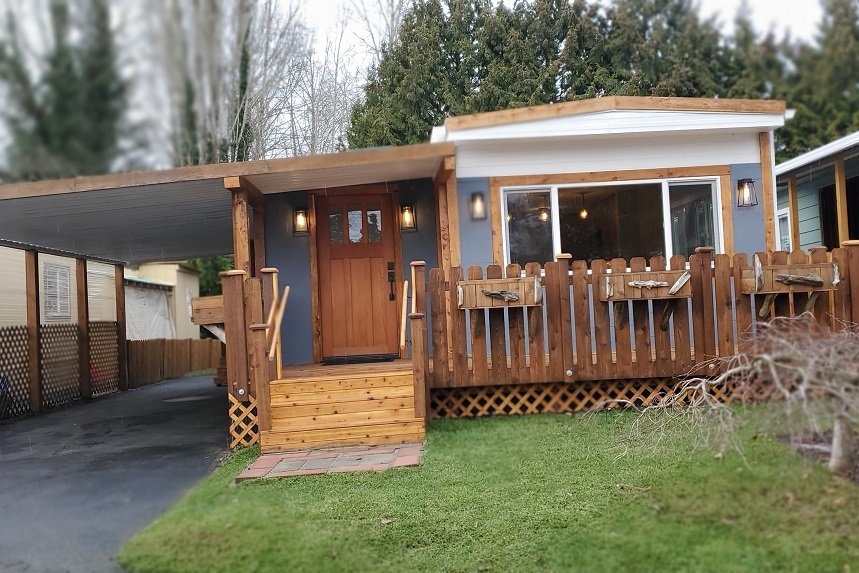 We wrapped all the exterior posts with wood as well as all exterior windows. Front deck offers entertaining space with a privacy fence.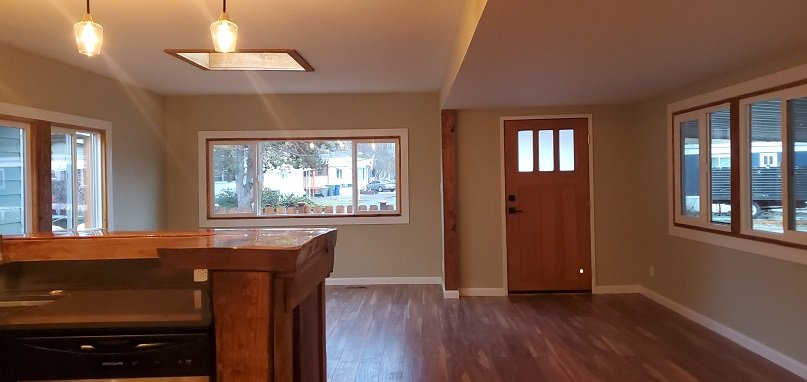
;)